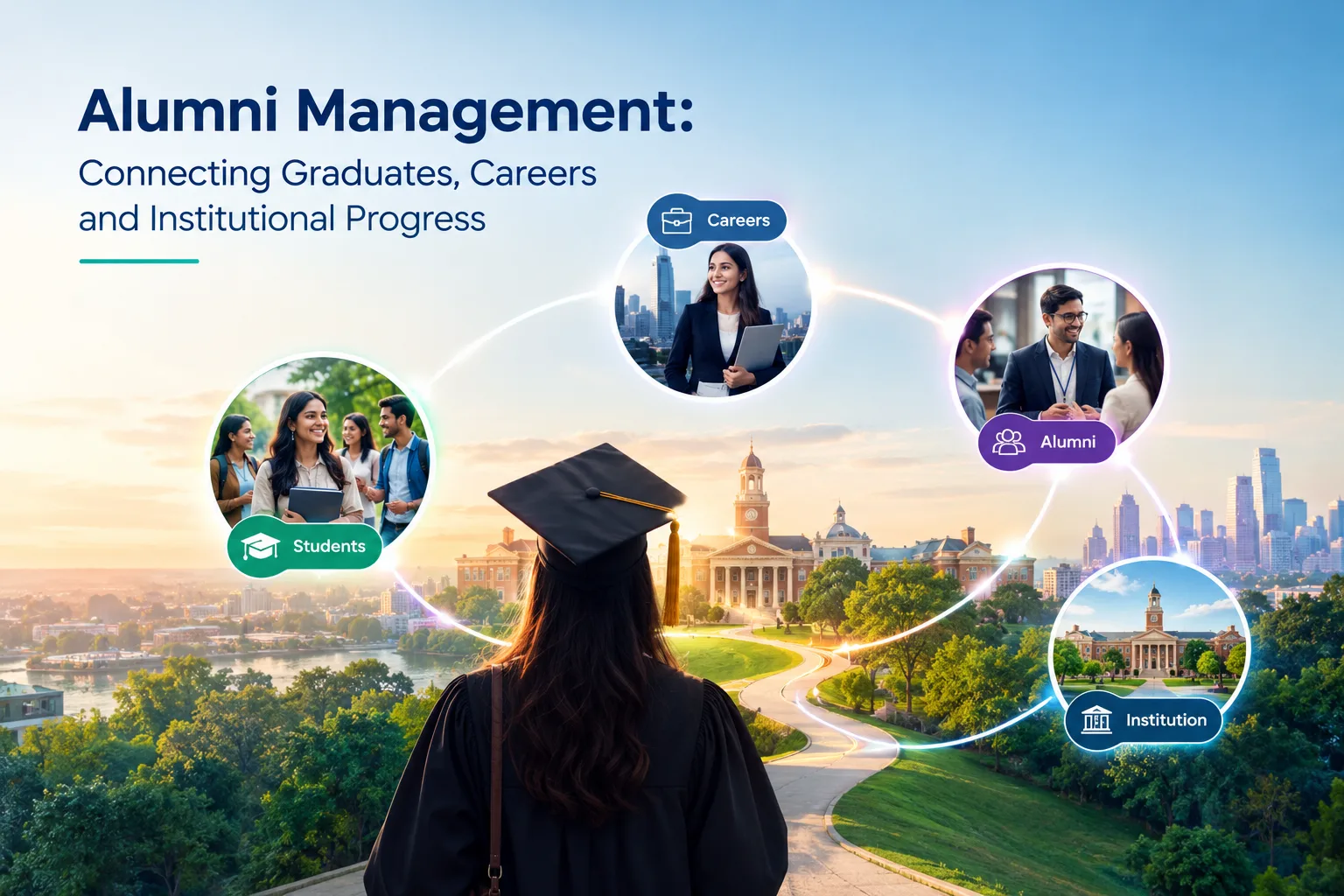
Alumni Management: Connecting Graduates, Careers and Institutional Progress
By Sonet Microsystems
Graduation marks the end of a formal academic programme, but it should not mark the end of an institution's relationship with its students. Once graduates enter the workforce, they gain experience, develop new skills, move across industries, and discover how well their education prepared them for professional life. This experience can become valuable institutional knowledge, provided the institution has a structured way to stay connected.
For many colleges and universities, however, alumni information remains scattered across spreadsheets, social media groups, old contact lists, and placement records. Institutions may know where some graduates studied or worked, but struggle to maintain an accurate picture of career progression, professional expertise, mentoring availability, and employment outcomes.
This is where alumni management needs a more strategic approach. Rather than treating graduates as a database to maintain or a community to contact occasionally, institutions can build an ongoing feedback loop between alumni, current students, placement teams, and academic leadership.
Why Alumni Networks Need to Become More Than Directories
An alumni directory is useful, but its value depends on what the institution can do with the information it contains. A list of names, graduation years, and contact details cannot independently support mentoring, career guidance, recruitment, or academic improvement.
The real opportunity lies in connecting alumni information with meaningful institutional activities.
Consider a college trying to understand why graduates from one programme are moving into roles different from those originally anticipated. If the institution can maintain updated employment information, invite alumni to share career experiences, and connect those insights with placement and academic data, it can develop a more informed view of changing industry expectations.
Similarly, an alumnus working in a specialised field could mentor students interested in that career path, while another graduate could share internship opportunities or participate in a placement drive.
Effective alumni management makes these relationships easier to establish, organise, and sustain. It transforms an institution's graduate network from a passive record into an active resource for student development and institutional learning.
Top 7 Ways Alumni Management Can Strengthen Higher Education Institutions
1. Maintain a Verified, Continuously Updated Alumni Network
Contact information becomes outdated as graduates change jobs, relocate, pursue further education, or move into new professional roles. A spreadsheet that was accurate at graduation may become unreliable within a few years.
A digital alumni management platform can provide graduates with self-service access to update their professional profiles, qualifications, employment details, and areas of expertise. Verification processes and periodic prompts can help institutions maintain more reliable information without depending entirely on manual follow-ups.
The objective is not simply to collect more data. It is to maintain information that supports relevant communication and practical engagement.
Institutions should also define who can access different profile fields, how information is verified, and how consent and privacy preferences are managed. A trusted network depends on graduates understanding how their information will be used.
2. Connect Current Students with Relevant Alumni Mentors
Students often need guidance that goes beyond classroom instruction. They may want to understand a particular career path, prepare for interviews, explore postgraduate options, or learn which skills employers value in a specific industry.
Alumni can provide practical perspectives based on their professional experience. However, successful mentoring requires more than making a directory available and asking students to contact graduates independently.
Structured mentor matching can connect students with alumni based on academic background, industry, professional role, career interests, or stated mentoring preferences. Institutions can also establish mentoring periods, define expectations, and collect feedback to improve future matches.
A connected student management portal can provide a convenient access point for students to discover relevant opportunities, subject to the institution's access and integration arrangements.
When mentoring becomes an organised process, alumni expertise can contribute to career readiness throughout the academic year rather than only during occasional guest lectures or annual reunions.
3. Connect Alumni Engagement with Placement Activity
Placement teams frequently coordinate recruiters, job descriptions, student applications, interview schedules, and employer communication. Alumni can strengthen this process because graduates working in industry may understand the skills required for particular roles and know where relevant opportunities exist.
Alumni management can help institutions identify graduates who are willing to share vacancies, provide referrals, conduct career sessions, or participate in recruitment activities.
When alumni engagement and placement operations are coordinated through a common platform, institutions can reduce fragmented communication and make opportunities easier to organise. Recruiter onboarding, job postings, and drive scheduling can follow a defined process instead of relying entirely on separate email threads and personal contacts.
This approach also allows institutions to involve graduates in ways that suit their availability. Not every alumnus can become a regular mentor, but some may be able to share a job opening, review a résumé, or speak to students about an emerging role.
4. Understand Graduate Outcomes Beyond Placement Numbers
Placement percentages provide one view of institutional performance, but they do not explain the full journey after graduation. Career progression, further education, changing job roles, professional certifications, and movement between industries can reveal additional information about graduate outcomes.
A structured alumni management process can help institutions collect this information through profile updates, graduate surveys, and career-tracking activities.
When interpreted carefully, the resulting data can help academic leaders explore questions such as:
Which industries are employing graduates from particular programmes?
What additional skills do alumni find useful in their current roles?
How many graduates pursue postgraduate education or professional qualifications?
Which career paths are emerging among recent graduating batches?
Where might students benefit from additional mentoring or career preparation?
These insights should inform investigation and discussion, not automatically determine curriculum decisions. Graduate outcomes are influenced by many factors, including regional employment conditions, individual choices, and economic changes. Nevertheless, better data gives institutions a stronger basis for asking the right questions.
5. Strengthen Accreditation and Institutional Reporting
Graduate progression, employability, higher studies, and engagement activities may contribute to institutional quality assessment and accreditation reporting. Collecting this information separately each time a report is due can create significant work for placement teams, departments, and quality assurance coordinators.
A connected higher education management system can help institutions maintain outcome information as part of ongoing operations instead of reconstructing it from scattered files at reporting time.
When alumni and placement records connect with relevant IQAC workflows, verified data can support reporting and evidence preparation for applicable NAAC and NBA requirements. The exact reports and data fields depend on the institution's reporting framework and the system's configuration.
This is an important distinction: alumni data becomes more useful when it is captured consistently, maintained responsibly, and available to authorised teams when required.
6. Connect Alumni Information with Academic and Administrative Systems
Alumni records do not exist independently of the institution's other information. A graduate's programme, batch, academic history, and transition from student to alumnus are connected to records already maintained during enrolment and study.
When alumni information is managed separately, staff may have to enter the same details more than once or reconcile conflicting records manually. Integrating alumni workflows with a student management system can help establish continuity between the student lifecycle and the graduate relationship, depending on the available integration.
Similarly, a broader campus management system can connect alumni activity with placement operations, academic administration, and institutional reporting.
This does not mean that every system should share every record. Institutions need appropriate permissions, clear data ownership, and reliable synchronisation rules. The goal is to reduce unnecessary duplication while keeping information accurate, secure, and accessible to the teams that need it.
7. Build Long-Term Engagement Around Meaningful Opportunities
Graduates are more likely to engage when an interaction offers a clear reason to participate. Generic newsletters and occasional reunion invitations can help maintain visibility, but a stronger engagement strategy offers relevant ways for alumni to contribute.
Examples include mentoring a student, sharing an internship, speaking about an industry trend, reviewing a project, joining a career panel, or providing feedback on professional skill requirements.
A well-organised alumni management process allows institutions to record these activities, identify areas of interest, and communicate opportunities that are relevant to different graduate groups.
It can also help institutions understand which forms of engagement are working. Participation in mentoring, career events, placement activity, and professional networking can be reviewed over time to guide future initiatives.
Engagement should remain voluntary and purposeful. The aim is to build a relationship that benefits graduates as well as the institution, not simply to increase the number of messages sent.
What to Look for in an Alumni Management Platform
Choosing an alumni solution requires more than checking whether it can store graduate details. Institutions should evaluate how effectively it supports the relationships and workflows they want to develop.
Key capabilities to consider include:
Verified alumni directory: Searchable profiles organised by programme, batch, industry, or professional role, with suitable verification and self-service updates.
Mentor matching: Ways to connect students with alumni based on career interests, expertise, and availability.
Placement coordination: Support for recruiter onboarding, job and internship sharing, and placement drive scheduling.
Graduate outcome tracking: Structured collection of employment, career progression, and higher-study information.
Institutional integration: Appropriate connections with existing ERP, student records, placement, and quality assurance workflows.
Reporting and analytics: Reliable information that helps authorised teams monitor engagement and prepare relevant reports.
Privacy and access control: Role-based permissions, consent management, and clear processes for maintaining graduate information.
For institutions already using higher education software, integration should be a central evaluation criterion. A new platform should complement existing academic and administrative systems rather than create another isolated database.
A college management system may already hold relevant student and programme records, while faculty management software supports separate staff workflows. Institutions should establish which information needs to connect, who owns each record, and how updates will be maintained.
The same principle applies to a higher education student management system or a broader higher education management system. The most useful configuration is one that supports the institution's real workflows without duplicating unnecessary data or compromising access controls.
Nexumni: Connecting Alumni, Careers and Institutional Outcomes
Sonet Microsystems' Nexumni is designed to connect alumni engagement with career development and placement operations. Its capabilities include a verified alumni directory, mentor matching, placement drive management, job and internship opportunities, and outcome reporting.
The platform is intended to make alumni information more useful in everyday institutional operations. Graduates can maintain their professional profiles, students can connect with alumni for relevant career guidance, and placement teams can coordinate recruitment activities through a more structured workflow.
Nexumni also shares its data layer with Sonet's UniSCOP and ESCOP platforms, allowing relevant placement and outcome information to feed into IQAC reporting without a separate data-entry step. This integration can help institutions connect graduate activity with wider academic and quality assurance processes.
For institutions looking to modernise alumni engagement, the objective is to bring graduate records, mentoring, placements, and outcome tracking into a connected environment rather than managing each activity independently.
Explore Nexumni Career & Alumni Intelligence to understand how its capabilities may fit your institution's requirements.
Conclusion: Treat Alumni as a Continuing Source of Institutional Insight
An institution's relationship with its graduates should continue to evolve after the degree is awarded. Alumni can contribute professional knowledge, mentor current students, share career opportunities, and provide useful perspectives on changing industry expectations.
A structured alumni management strategy makes these contributions easier to organise and sustain. By connecting verified profiles, mentoring, placement activity, graduate outcomes, and institutional reporting, colleges and universities can develop a more complete understanding of the community they have educated.
The long-term opportunity is not merely to maintain contact with former students. It is to create a two-way relationship in which graduates gain meaningful ways to contribute, current students benefit from real-world guidance, and institutions learn from the professional journeys of their alumni.