
How School ERP Connects the Entire School Ecosystem
By Sonet Microsystems
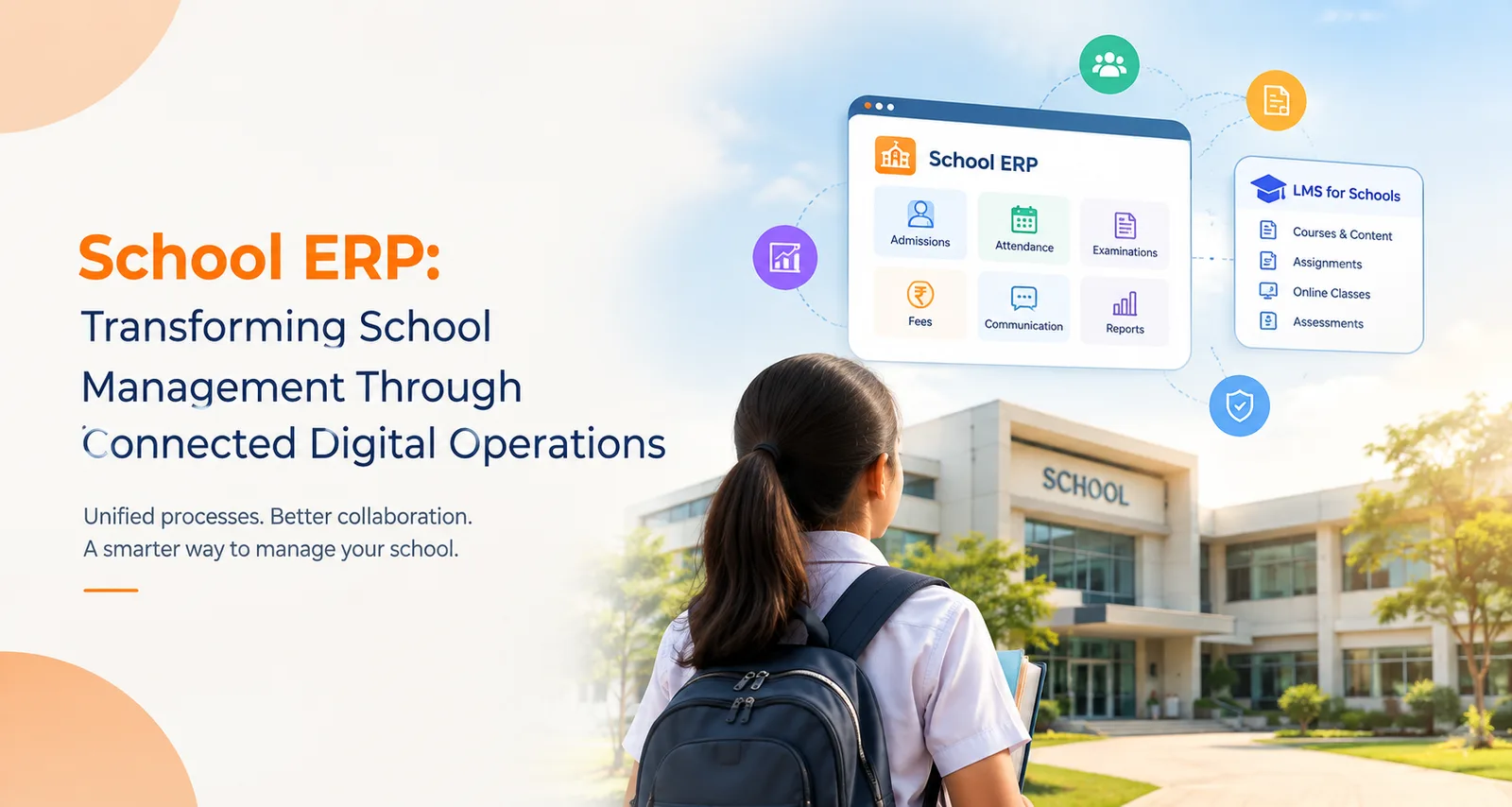
School administration has become far more complex than maintaining student records and preparing report cards. Schools today coordinate admissions, fees, attendance, examinations, academics, transport, communication, staff, compliance and parent engagement across multiple teams. When these processes operate through disconnected registers, spreadsheets and standalone applications, administrators spend valuable time reconciling information instead of acting on it.
A school ERP brings these operational functions into a unified digital environment. For principals, registrars, heads of departments and administrative leaders, the value is not simply automation. It is having reliable information, consistent processes and greater visibility across the institution.
What Is a School ERP?
A school ERP is an integrated platform designed to manage the academic, administrative and operational activities of a school from a central system. Instead of maintaining separate records for admissions, attendance, fees, examinations and communication, a school ERP connects these functions and allows authorized users to work with shared institutional data.
A modern school management system should support the way schools actually operate: class and section structures, academic terms, teacher workflows, student records and parent communication. The objective is to create one unified operational framework rather than add another layer of software.
For institutional leadership, this centralized approach can make everyday's decision-making more informed. Principals can view operational and academic information, administrators can manage workflows, HODs can monitor academic activity, and registrars can access student and admission records without repeatedly requesting data from different departments.
Why Schools Need an Integrated ERP
The challenge for many schools is not a lack of digital tools. A school ERP addresses this fragmentation by creating a common operational layer. One application is to handle fees, another for attendance, and lots of spreadsheets to maintain students' information, while teachers have to use separate platforms for assignments and learning.
An integrated school ERP connects these workflows flawlessly. When implemented thoughtfully, a school ERP can also establish consistent processes across departments. A student can be admitted through the admission process and can have a corresponding institutional record, which can then support attendance, fee management, examinations, academic reporting, parent services, and many more things. This reduces the chance of duplicate data entry and creates greater consistency across departments.
A well-designed school management software can also give administrators a clearer view of processes that previously depended on manual follow-ups. Instead of asking several teams for updates, authorized users can work from centralized dashboards and reports.
Core Functions of a School ERP
1. Admission and Student Information Management
Admissions are often the first major interaction between a family and a school. An integrated admission management system can organize inquiries, applications, documentation, and student registration in a structured workflow.
Once a student is enrolled, the same information can support the student's academic and administrative journey. This creates a connected record rather than requiring teams to recreate information at every stage.
A school ERP can therefore connect the admission process with the wider student lifecycle, giving registrars and administrators greater continuity from inquiry and registration through academic progression.
2. Attendance and Student Monitoring
Attendance is both an operational requirement and an important indicator of student engagement. Within a school ERP, attendance information can become part of the wider student record.
With a well-organized student attendance system, teachers can keep the attendance record while administrators can monitor patterns across classes and sections. Student attendance tracking can also support communication with parents when integrated with the school's notification workflows.
For principals and HODs, centralized attendance information can make it easier to identify recurring patterns and initiate appropriate academic or administrative follow-up.
3. Examination and Academic Management
Examination processes involve scheduling, assessments, marks, grading and report generation. A school ERP can bring these academic processes into the same institutional framework.
An integrated exam management software module can centralize examination schedules, marks and academic records. This enables teachers and academic leaders to work from a common dataset while reducing repetitive administrative tasks.
For HODs and academic coordinators, this connected approach can simplify the movement of information from assessment to academic reporting and provide a clearer view of student performance.
4. Fee and Financial Administration
Fee collection involves more than recording payments. Schools need structured fee plans, payment tracking, receipts, reminders, and reporting.
When fee management is part of a school ERP, the financial workflow becomes connected to the broader student record. Administrators can manage fee-related activities alongside other institutional processes, while automated reminders and digital payment workflows can reduce routine follow-ups.
For school leadership, centralized financial information can also make routine monitoring and reporting more structured.
5. Timetable and Resource Coordination
Class schedules involve teachers, subjects, sections, rooms and substitutions. A centralized timetable module can help schools organize these dependencies and provide the right information to teachers and students. For HODs and academic coordinators, visibility into schedules can make it easier to identify conflicts, manage substitutions, and coordinate academic activities.
Rather than treating timetable management as an isolated task, an integrated system can connect it with the wider academic structure of the school.
6. Parent and School Communication
Effective communication is increasingly part of the school experience. Parents may need timely information about attendance, fees, homework, examinations, notices, or transport.
Only a unified school ERP can bring these updates into structured communication workflows through portals, mobile access, SMS, or messaging integrations. This creates a more consistent communication channel and reduces the need for parents to rely on repeated calls to the front office.
The result is a more connected experience for administrators, teachers, students, and parents.
Connecting School ERP with Digital Learning
Administrative automation and digital learning should not exist as separate ecosystems. Schools increasingly need technology that connects operational data with teaching and learning.
This is where learning management software for schools can complement a school ERP. Together, the school ERP and learning platform can connect administration with classroom delivery. An LMS can support course content, assignments, worksheets, quizzes, online classes and learning resources, while the ERP manages institutional records and operational processes.
Modern LMS systems for schools can also benefit from ERP integration. When class, section and student information flows from the ERP into the learning environment, teachers do not need to recreate basic academic structures manually. Sonet's LMS for Schools, for example, is designed to use class, section and student information from eSSMS when the platforms are integrated.
For schools adopting blended learning, an integrated ERP and LMS approach can provide a more coherent digital ecosystem. Academic teams can focus on teaching and learning while administrators maintain visibility over the broader institution.
What School Leadership Should Look for in an ERP
Choosing an ERP for school operations should not be based only on the number of modules listed by a vendor. School leaders should evaluate how well the platform supports real workflows and whether it can scale with institutional requirements.
Key considerations include:
Unified student and institutional data
Role-based access for administrators, teachers and other users
Admission, attendance, examination and fee workflows
Parent and student portals
Reporting and dashboards for leadership
Integration with digital learning platforms
Mobile accessibility
Data security and controlled access
Support for multiple classes, sections and branches
Configurable workflows for the school's operational model
For principals and administrators, usability matters as much as functionality. A technically capable system that staff find difficult to use may not deliver its intended value. The implementation approach, training, support and integration capabilities should therefore be considered alongside the software itself.
From School Operations to Institutional Intelligence
The long-term value of a school ERP lies in what schools can do with connected information. Once operational data is organized in one environment, leadership teams can move beyond individual transactions and gain a broader view of institutional performance.
Attendance trends can be reviewed alongside academic activity. Admission data can inform enrolment planning. Fee information can support financial follow-up. Examination results can help academic leaders identify areas requiring attention.
A school ERP does not replace institutional judgment. Rather, it gives decision-makers a stronger information base for planning, monitoring and improving school operations.
This distinction is particularly important for senior leadership. Technology should support better decisions, not create another layer of complexity that staff have to manage.
A Connected Digital Foundation for Modern Schools
A school today needs more than isolated digital tools. It actually needs a connected infrastructure that supports administration, academics, communication and the student experience without creating unnecessary complexity.
A well-implemented school ERP can provide that foundation by bringing essential workflows into one environment. From admission and student records to attendance, examinations, fees, communication and digital learning integration, it can help schools reduce repetitive work while improving institutional visibility.
For principals, HODs, registrars, and administrative leaders, the question is therefore not simply whether a school should adopt technology. It is whether its technology ecosystem can support the way the institution needs to operate, scale and serve students.
The right school ERP is not just an administrative platform. It can become the digital backbone through which a school connects people, processes and information to build a more coordinated foundation for the future of education.